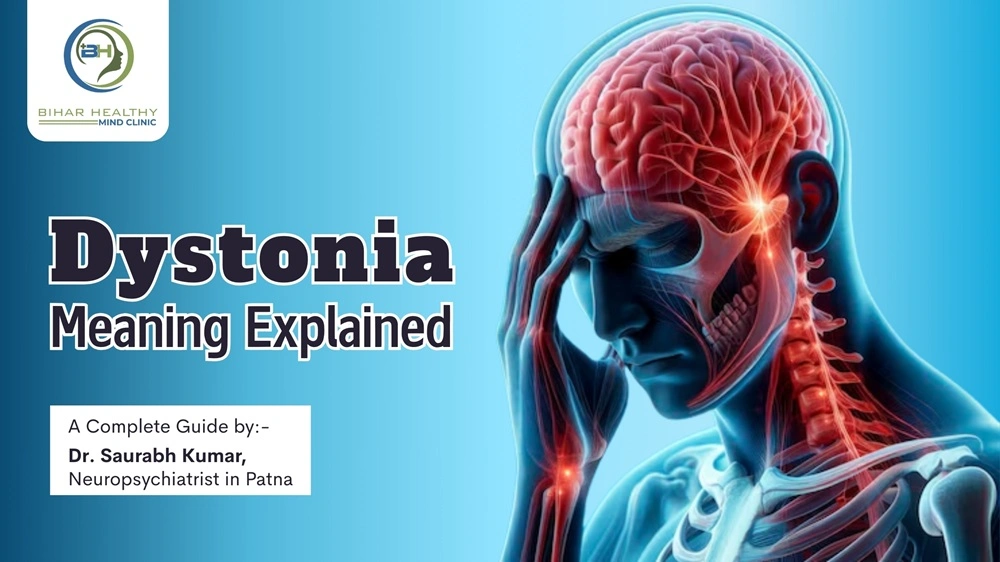
Dystonia is one of the lesser-known neurological conditions, yet it profoundly affects the quality of life of those who experience it. Many people searching for what is dystonia or trying to understand dystonia meaning often struggle to find clear, structured information. At Patna Psychiatry, under the care of Dr. Saurabh Kumar, MD (Psychiatry), widely recognized as one of the best neuropsychiatrist in Patna, patients receive comprehensive evaluation and long-term management for challenging movement-related disorders, including various forms of dystonia.
This guide breaks down the condition in simple, accessible language while maintaining medical accuracy, helping patients and families better understand dystonia disease, its symptoms, causes, and available treatment options.
What Is Dystonia? Understanding the Medical Definition
To begin with, dystonia meaning refers to a neurological movement disorder characterized by involuntary muscle contractions, leading to repetitive twisting movements or abnormal postures. These contractions can occur in a single part of the body or may involve multiple regions.
A person experiencing muscle dystonia may find that certain muscles behave erratically, tightening or twisting without their control. These dystonic movements can be sustained or intermittent, and they often worsen with stress, fatigue, or specific activities.
Dystonia is not a psychiatric illness, but its chronic nature and physical limitations often require interdisciplinary care, including neuropsychiatric expertise.
Types of Dystonia
The types of dystonia vary widely depending on the part of the body affected and the underlying cause. The major classifications include:
1. Focal Dystonia
This form affects a specific body part such as:
- Neck (Cervical dystonia)
- Eyelids (Blepharospasm)
- Vocal cords (Laryngeal dystonia)
- Hands or forearms (Writer’s cramp)
2. Segmental Dystonia
This type affects two or more adjacent regions of the body. For example, neck and shoulder involvement together.
3. Generalized Dystonia
Generalized dystonia involves multiple areas of the body, typically starting in one limb and then spreading. This form is usually more severe and may significantly interfere with mobility.
4. Hemidystonia
Here, only one side of the body is involved. It often results from structural lesions in the brain.
5. Task-Specific Dystonia
These dystonic movements appear only during specific activities such as writing, playing an instrument, or typing.
Understanding these categories helps both patients and clinicians identify the severity, triggers, and appropriate treatment approach.
What Causes Dystonia?
The question of what causes dystonia does not have a single answer, as the condition can develop from various underlying factors. The major dystonia causes include:
1. Genetic Factors
Some forms of dystonia are inherited. Specific gene mutations have been linked to early-onset generalized dystonia.
2. Brain Disorders
Damage to the basal ganglia, a region controlling motor functions can result in dystonia movement disorder. Causes include:
- Stroke
- Brain injury
- Infections
- Oxygen deprivation
3. Medication-Induced Dystonia
Certain drugs, especially antipsychotics and anti-nausea medications, can trigger acute dystonic reactions.
4. Metabolic or Degenerative Diseases
Conditions affecting the brain’s chemical balance may lead to dystonia patient symptoms.
5. Idiopathic Dystonia
In many cases, the exact cause remains unknown. This is termed idiopathic dystonia, and it is the most common form.
Symptoms and Signs of Muscle Dystonia
The symptoms vary depending on the type and severity of the disorder, but typical features include:
- Involuntary twisting or repetitive movements
- Abnormal, fixed postures
- Muscle spasms or cramps
- Tremor-like shaking
- Difficulty with fine motor tasks
- Pain or discomfort from sustained contractions
The onset can be gradual, making early diagnosis essential for better outcomes.
Dystonia Treatment: What Are Your Options?
Effective dystonia treatment depends on accurate diagnosis and a personalized approach. At Patna Psychiatry, Dr. Saurabh Kumar ensures that each patient receives a detailed neuropsychiatric assessment before beginning treatment.
1. Medications
Several medicines help regulate neurotransmitter activity and reduce dystonic movements, including:
- Muscle relaxants
- Anticholinergic drugs
- Dopaminergic agents
2. Botulinum Toxin (Botox) Injections
A standard treatment for focal dystonia. It temporarily weakens the overactive muscles, providing relief for 3-4 months.
3. Physiotherapy & Rehabilitation
Strengthening and stretching exercises help manage posture abnormalities and prevent stiffness.
4. Deep Brain Stimulation (DBS)
In severe or generalized dystonia cases, DBS surgery may be recommended. Electrodes implanted in specific brain areas help normalize motor signals.
5. Psychological Support
Although dystonia is neurological, the chronic nature of the disorder can lead to emotional distress. Neuropsychiatric care can help manage anxiety, depression, or social withdrawal linked to the condition.
Life as a Dystonia Patient: Coping and Support
Being a dystonia patient can be challenging, especially when the condition affects self-confidence, work, or daily functioning. Early intervention, combined with continuous follow-up and emotional support, significantly improves quality of life.
Patna Psychiatry provides a patient-centered approach, ensuring that medical, psychological, and functional needs are addressed holistically.
Conclusion
Dystonia is a complex yet manageable dystonia movement disorder. Understanding dystonia meaning, its causes, symptoms, and treatment empowers individuals to seek timely help. With expert care from specialists like Dr. Saurabh Kumar, among the best psychiatrists in Patna and the best neuropsychiatrist in Patna, patients can achieve meaningful improvement and long-term stability.
If you or someone you know is experiencing unexplained muscle spasms, twisting, or abnormal postures, consult a qualified neuropsychiatrist for early diagnosis and personalized treatment.
Visitors: 48
Leave a Comment
Comments (0)
Recent Posts
-
 Understanding the Blue Mood: How Monday Blues Affect Mental Health and Ways to Combat Them
-
 De Addiction Explained: Types of Addiction and How They Are Treated Effectively
-
 PANDAS Disease: Causes, Latest Research, and Treatment Options
-
 Hysteria Disease: Causes, Treatment, and Coping Strategies
-
 Schizoaffective Disorder Explained: Triggers, Symptoms, and Diagnosis
No comments yet.