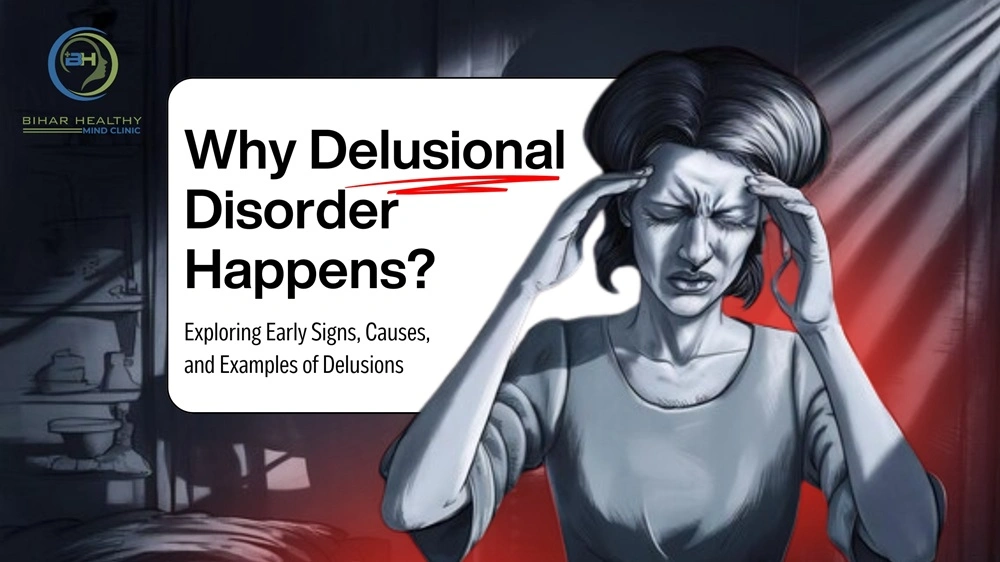
Delusional disorder is a complex mental health condition marked by deeply held beliefs that are not based in reality. These beliefs can significantly impact a person's perception, relationships, and day-to-day functioning. Many people look up topics like examples of delusions or delusional person meaning because they notice unusual behavioral or thought patterns in themselves or a loved one. Recognizing the early signs and understanding why these thoughts develop can make a crucial difference in treatment outcomes.
This comprehensive guide explains the early indicators, delusional symptoms, types of delusional disorder, the etiology of delusional disorder, and practical approaches to treatment. Written from the perspective of a mental health professional, this blog aims to offer clarity and reliable insights for readers seeking help from the best psychiatrist in Patna or anywhere else.
At Patna Psychiatry, Dr. Saurabh Kumar, MD (Psychiatry), provides exceptional support and evidence-based treatment for individuals experiencing delusional beliefs and other psychiatric challenges.
What Is Delusional Disorder?
In simple terms, delusion is a disorder of thought perception, where a person strongly believes something that is clearly untrue or not based on facts. These beliefs persist even when there is evidence disproving them.
A delusional disorder does not always cause hallucinations or significant personality changes, but the core belief system becomes distorted. Understanding the delusional person meaning helps families recognize that such individuals are not being stubborn, they are experiencing a mental health condition that affects their reality-testing ability.
Early Signs and Delusional Symptoms
Recognizing the early delusional disorder symptoms is important for timely intervention. In many cases, individuals begin showing subtle warning signs that gradually progress.
-
Common Early Signs:
- Persistent beliefs that others are lying or hiding information
- Misinterpreting harmless events as threats
- Excessive suspicion and mistrust
- Reduced social engagement
- Irritability or defensiveness when beliefs are questioned
- Over-focus on a single idea or event
-
Common Delusional Symptoms:
- Unshakeable false beliefs that differ from cultural or social norms
- Strong emotional reactions linked to the delusion
- Difficulty separating reality from interpretation
- Inability to consider alternative explanations
These symptoms may vary depending on the subtype, severity, and duration of the disorder.
Examples of Delusions: How They Present in Real Life
Understanding examples of delusions helps people identify when a belief has crossed into clinically significant territory.
-
Frequently Seen Delusional Themes:
- Persecutory Delusions – Believing someone is spying, following, or trying to harm them.
- Jealous Delusions – Assuming a partner is being unfaithful without any evidence.
- Grandiose Delusions – Thinking one has extraordinary talents, power, or identity.
- Somatic Delusions – Believing one has a severe medical problem without medical proof.
- Erotomanic Delusions – Believing a stranger or public figure is secretly in love with them.
These experiences can cause significant distress, disrupt relationships, and lead to unsafe behaviors.
Types of Delusional Disorder
Identifying the types of delusional disorder is crucial for tailored treatment.
-
Some common types include:
- Persecutory Type
- Grandiose Type
- Erotomanic Type
- Jealous Type
- Somatic Type
- Mixed Type, where more than one theme is present
Each type has distinct characteristics that influence clinical management and the person's day-to-day functioning.
Why Delusional Disorder Happens: Understanding the Etiology
The etiology of delusional disorder is multifactorial. Several biological, psychological, and environmental influences can contribute to its onset.
1. Biological Factors
Genetic predisposition plays a major role. People with a family history of psychotic disorders may be at higher risk. Imbalances in neurotransmitters like dopamine can also affect how the brain interprets information.
2. Psychological Factors
Individuals with certain personality traits such as suspiciousness or hypersensitivity—may be more susceptible. Past trauma, emotional neglect, or isolation can also shape how people view their surroundings.
3. Environmental Factors
Stressful life changes, relationship conflicts, or sudden loss can trigger delusional thinking in vulnerable individuals. Chronic stress alters brain function, making it easier for misperceptions to turn into fixed beliefs.
Understanding these causes allows mental health professionals to create more effective treatment plans tailored to a patient’s needs.
Delusional Disorder Prognosis: What to Expect
The delusional disorder prognosis varies widely based on early detection, treatment adherence, and family support. Many people can lead stable and productive lives with appropriate psychiatric care, especially when treatment begins early.
People who receive timely intervention often experience reduced symptom severity, improved insight, and better social functioning.
Delusional Disorder Treatment: How It Works
Effective delusional disorder treatment combines medication, psychotherapy, and lifestyle changes.
1. Medication
Antipsychotics are commonly used to regulate neurotransmitters and reduce delusional thinking. The choice of medication depends on symptom severity and patient response.
2. Psychotherapy
Cognitive-behavioral therapy (CBT) is highly effective in addressing distorted beliefs and improving coping mechanisms. Therapy also strengthens insight and teaches individuals how to respond to triggers.
3. Family Counseling
Family involvement helps create a supportive environment and reduce misunderstandings.
4. Lifestyle Modification
Regular sleep, stress management, structured routines, and reduced substance use improve outcomes significantly.
At Patna Psychiatry, Dr. Saurabh Kumar, widely recognized as the best psychiatrist in Patna, offers compassionate, evidence-based treatment customized to each individual’s symptoms and needs.
When to Seek Help
If you or someone you know shows signs of persistent false beliefs or misinterpretation of reality, seeking professional support early can prevent complications. Delusional disorder does not improve without treatment, but with proper intervention, most people can experience meaningful recovery.
Patna Psychiatry provides a safe, confidential space for individuals struggling with delusions, emotional distress, or any psychiatric concerns.
Conclusion
Delusional disorder is a complex mental health condition that often goes unnoticed in its early stages, yet timely recognition can make a significant difference in recovery. By understanding the early warning signs, examples of delusions, underlying causes, and available treatment options, individuals and families can approach this condition with clarity and preparedness. Although delusions can severely impact relationships, work, and daily functioning, the right blend of psychiatric care, therapy, and support can lead to meaningful improvement.
If you or someone close to you is experiencing persistent false beliefs or unexplained behavioral changes, seeking professional help is essential. With proper diagnosis and treatment, individuals with delusional disorder can regain stability, develop insight, and work toward a healthier, more fulfilling life.
Visitors: 62
Leave a Comment
Comments (0)
Recent Posts
-
 Understanding the Blue Mood: How Monday Blues Affect Mental Health and Ways to Combat Them
-
 De Addiction Explained: Types of Addiction and How They Are Treated Effectively
-
 PANDAS Disease: Causes, Latest Research, and Treatment Options
-
 Hysteria Disease: Causes, Treatment, and Coping Strategies
-
 Schizoaffective Disorder Explained: Triggers, Symptoms, and Diagnosis
No comments yet.