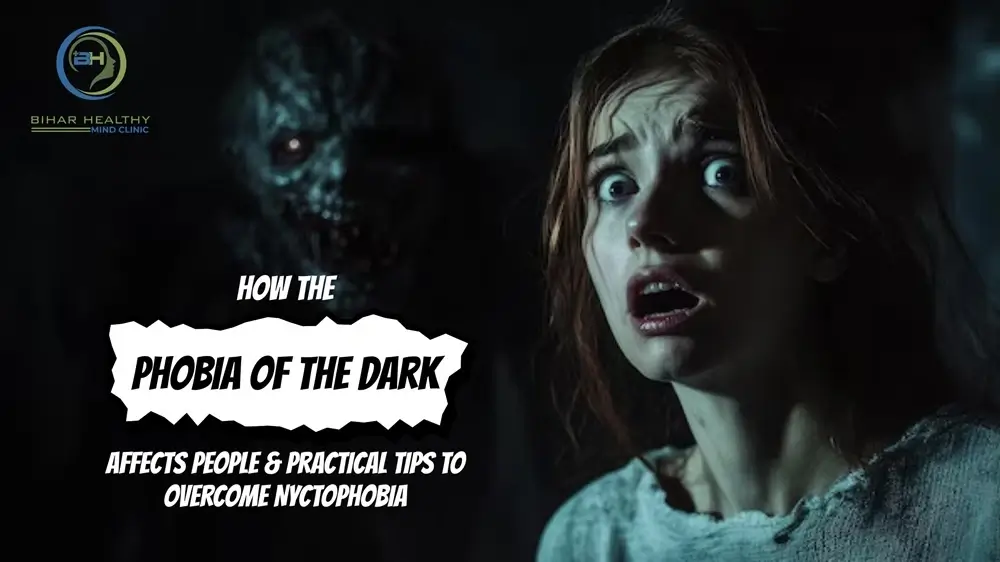
Feeling uneasy in complete darkness is quite common, especially in childhood. But when this fear becomes overwhelming and begins to interfere with daily functioning, sleep patterns, or emotional stability, it may indicate nyctophobia, commonly known as the phobia of the dark. At Patna Psychiatry, individuals often seek help for this condition, feeling confused or embarrassed about its impact on their lives. However, the fear of darkness is called a legitimate psychological challenge, and with the right support, it can be effectively managed.
In everyday conversations, people use various terms such as achluophobia, night phobia, and the fear of night to describe this unsettling experience. Medically, the correct dark phobia name is nyctophobia, which represents an excessive and persistent fear triggered by darkness or the absence of light. Understanding the nyctophobia meaning, its symptoms, and how it affects mental health plays a crucial role in early intervention.
What Is the Fear of the Dark Called? Understanding Nyctophobia
Many individuals often wonder, “What is the phobia of darkness called?” or “What is the fear of the dark referred to as?” This condition is known as nyctophobia, a type of specific phobia marked by an intense fear triggered by darkness.
Nyctophobia Definition
A persistent, irrational fear of darkness that leads to anxiety, avoidance behavior, and emotional distress. The condition affects both children and adults. In many cases, adults hesitate to seek help because they assume that being afraid of the dark phobia is childish. Nevertheless, studies show that the fear of darkness in adults is more common than people think. When the fear begins to disturb sleep, relationships, and emotional health, psychiatric assessment becomes essential.
Nyctophobia Symptoms: Identifying the Condition
Recognizing nyctophobia symptoms helps differentiate normal fear from a full-fledged phobia.
-
Psychological Signs
- Persistent anxiety linked with dark environments
- Overwhelming thoughts about danger
- Emotional unrest or dark feelings
- Avoidance of nighttime activities
-
Physical Responses
- Elevated heart rate
- Trembling or sweating
- Restlessness or difficulty sleeping
- Shortness of breath
-
Behavioral Patterns
- Keeping extra lights on
- Hesitating to be alone at night
- Difficulty engaging in nighttime routines
- Avoiding travel after sunset
Causes of Night Phobia: Why Does Nyctophobia Occur?
Nyctophobia can originate from different psychological, emotional, or environmental factors.
- Childhood Trauma: A frightening event, especially in early years, may linger as an unprocessed fear.
- Anxiety Disorders: Darkness heightens uncertainty, making individuals with anxiety more vulnerable.
- Learned Behavior: Fear passed down from parents or exposure to frightening situations reinforces nighttime anxiety.
- Evolutionary Triggers: Humans are naturally cautious in the dark; however, when this instinct becomes extreme, it evolves into a phobia.
How to Overcome a Fear of the Dark: Effective Strategies
People often search for “how to overcome a fear of the dark” or “how to overcome fear of darkness in adults” when they start noticing disruptions in their daily life.
-
The following techniques can make a significant difference:
- Cognitive Behavioral Therapy (CBT): Helps identify and correct irrational thoughts related to darkness.
- Gradual Exposure: Controlled exposure helps reduce hypersensitivity and normalize darkness.
- Relaxation Techniques: Breathing exercises and grounding help regulate emotional reactions.
- Light Management: Using dim lighting or night lamps eases the transition to darker environments.
- Professional Treatment: Seeking help from the best psychiatrist in Patna, such as Dr. Saurabh Kumar (MD Psychiatry) at Patna Psychiatry, ensures structured and personalized intervention.
Deeper Psychological Understanding of the Phobia of the Dark
For many people, the phobia of the dark extends beyond fear of what cannot be seen. From a psychiatric point of view, this phobia often reflects deeper emotional processing challenges. Darkness removes visual cues, causing the brain to heighten its sensitivity. This contributes to a state of hyper-awareness, making individuals misinterpret harmless sounds or sensations.
Cognitive Effects in Nyctophobia
People dealing with nyctophobia or achluophobia often experience intensified mental activity at night. Their minds compensate for the absence of light by creating exaggerated interpretations of their surroundings.
-
Common thought patterns include:
- Misjudging harmless situations
- Imagining potential threats
- Over-assessing normal nighttime sounds
- Feeling trapped in anxious mental loops
Such cognitive distortions help explain why people search terms like “what is nyctophobia” or “what is the phobia of darkness called” when trying to understand their emotional struggle.
How Fear of Darkness Affects Adult Behavior
The fear of darkness in adults often manifests differently from childhood fears.
-
Typical behaviors include:
- Avoiding nighttime social activities
- Delaying bedtime to avoid darkness
- Keeping multiple lights on continuously
- Being unable to stay alone at night
These behavioral changes reinforce the phobia, making the fear of the dark phobia stronger over time.
Night Phobia and Emotional Sensitivity
For some individuals, nighttime amplifies internal worries, making night phobia more emotionally challenging.
-
Emotional triggers may include:
- Loneliness that intensifies after sunset
- Increased vulnerability
- Old memories resurfacing
- Heightened self-awareness
Such reactions lead many to ask, “Why am I scared of the dark phobia even as an adult?”
Intrusive Thoughts and Dark Feelings
Individuals with phobia of darkness often encounter intrusive thoughts at night, which can worsen anxiety.
-
Common intrusive experiences:
- Sudden fearful images
- Sensitivity to random noises
- Unwanted speculative thoughts
- Imagining danger despite safety
These thoughts make individuals search for reassurance about the meaning of nyctophobia or fear of night is called what.
Breaking the Avoidance Cycle
Avoidance strengthens nyctophobia. The key to improvement is consistent, balanced exposure combined with emotional regulation.
-
Helpful strategies include:
- Gradual dimming of lights
- Relaxation exercises before bedtime
- Positive nighttime routines
- Reducing alertness triggers like caffeine
When Professional Support Is Needed
If symptoms interfere with personal or social life, seeking help is important. Under guidance from experts such as the best psychiatrist in Patna at Patna Psychiatry, individuals can achieve long-term recovery through structured therapy, counseling, and lifestyle modifications.
Conclusion
The fear of the dark phobia name, nyctophobia, may seem simple but often reflects deeper emotional or psychological issues. With proper understanding, gradual exposure, and timely psychiatric support, individuals can overcome this fear and reclaim control over their nighttime peace.
Visitors: 87
Leave a Comment
Comments (0)
Recent Posts
-
 Understanding the Blue Mood: How Monday Blues Affect Mental Health and Ways to Combat Them
-
 De Addiction Explained: Types of Addiction and How They Are Treated Effectively
-
 PANDAS Disease: Causes, Latest Research, and Treatment Options
-
 Hysteria Disease: Causes, Treatment, and Coping Strategies
-
 Schizoaffective Disorder Explained: Triggers, Symptoms, and Diagnosis
No comments yet.